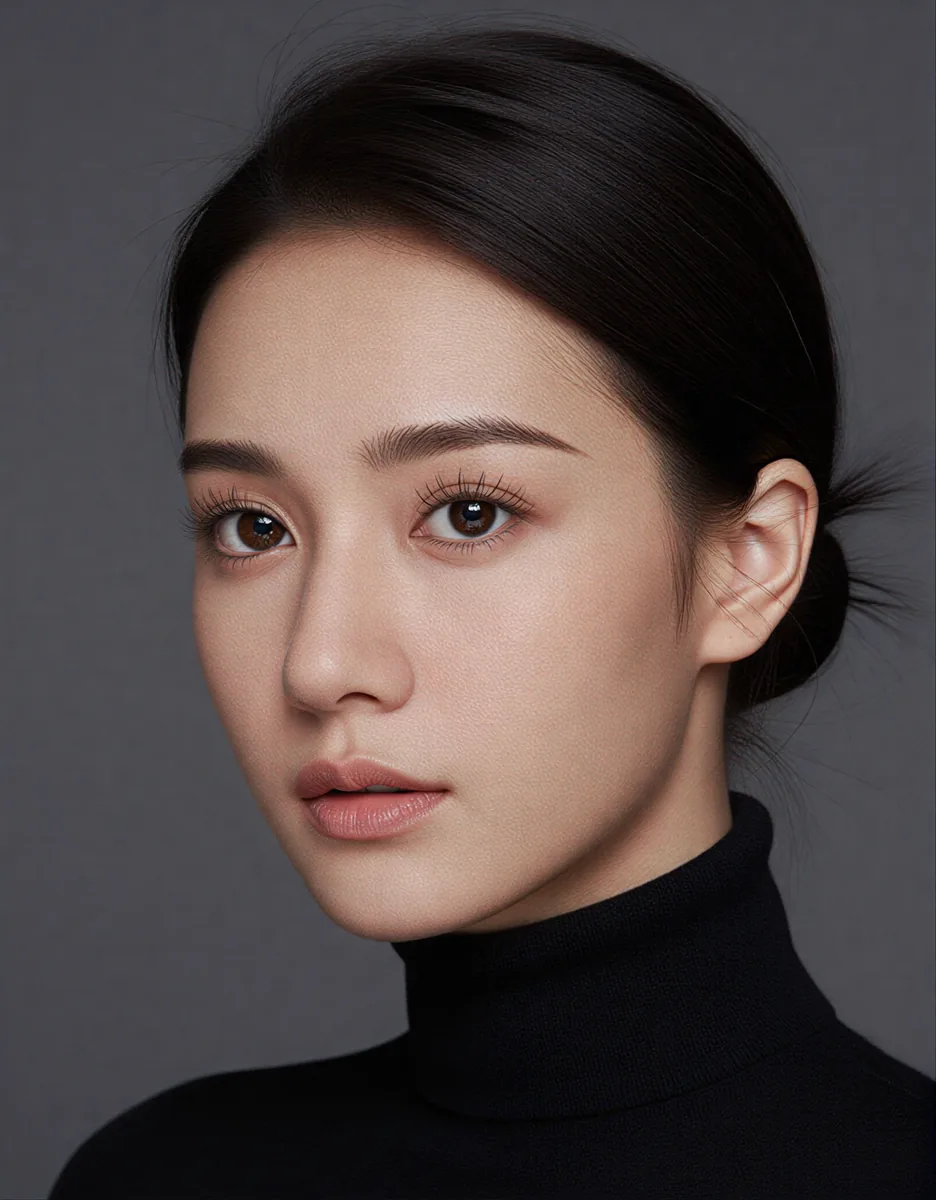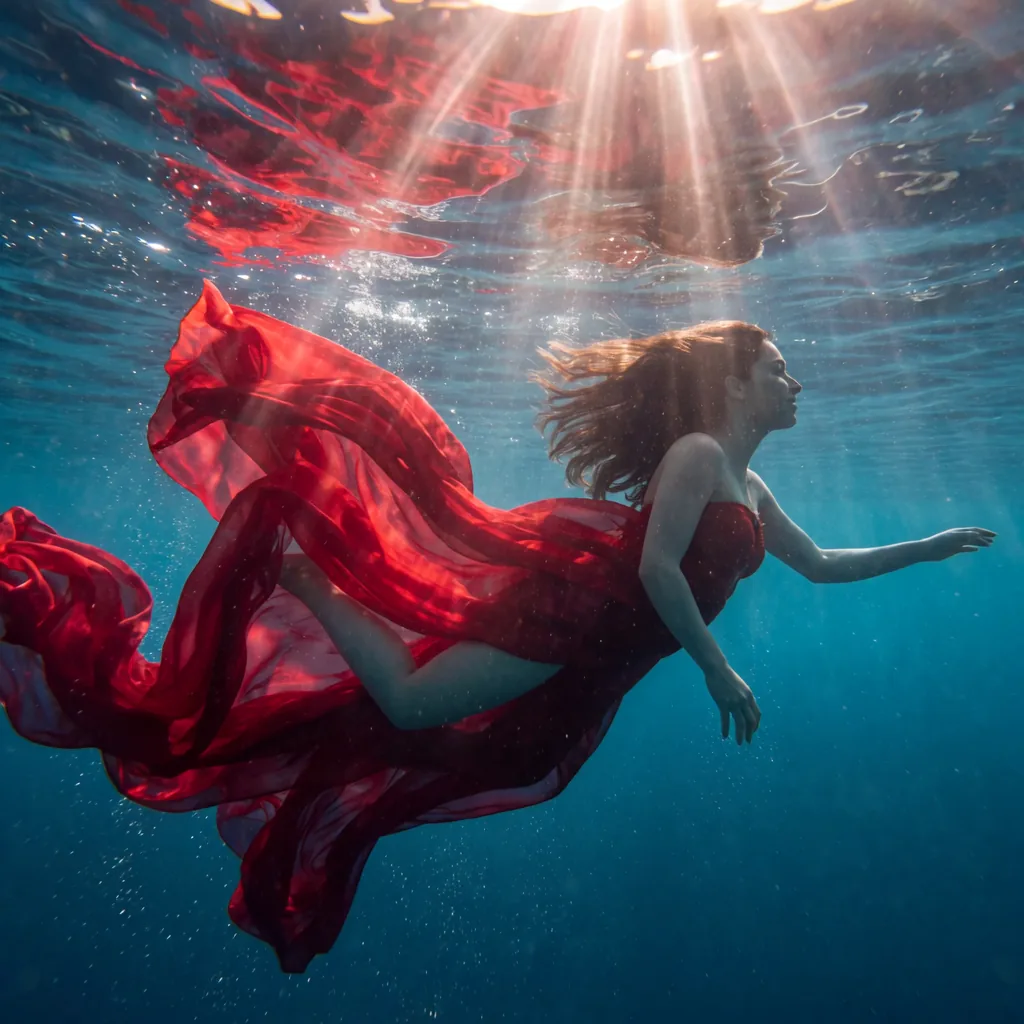
A character LoRA learns what it sees. Most character datasets are clothed, because that is what you can render, curate and share, and because the face is what you are trying to get right. The trainer sees a face from twenty angles, the hair, the skin tone, and a body under fabric. Build, roughly, yes. Everything the fabric covers, no.
So when the finished LoRA is asked for a picture without the clothes, the base model fills in what it never learned, and it does that per seed. Change the seed and the body changes: the proportions move, the chest changes size, marks appear and disappear. The face stays, because the face was trained. The body was always a guess.
Prompting around it does not hold
The first thing everyone tries is a longer prompt. A body description helps a little, and it costs you. The text encoder weighs every word, so a paragraph about the body pushes the camera back and the head out of frame. You have to paste it into every prompt, forever. And it still drifts, because the prompt is a request and the LoRA is a habit.
The second thing people try is a body-shape LoRA stacked on top. That gives you a body type, not a body: it is somebody else's average, it fights the character LoRA for the same layers, and it changes the face a little in every picture.
Describe once, render once, train once
The fix we settled on is to put the body into the LoRA the same way the face got there: by training on pictures that show it.
The character's own LoRA renders a set of reference pictures. Every one of them is rendered from the same written description of the body, one sentence the buyer builds from a list of options: build, chest, hips, skin and the rest, one choice per group. Because the same sentence is in every reference prompt, the references agree with each other. That agreement is the whole point. Fifty pictures that all show the same body are a dataset. Fifty pictures that each guess differently are noise, and training on noise gives you back the problem you started with.
The references then join the character's clothed set and the character is trained again. The result is a second LoRA for that character. Given a prompt with no body words at all, it draws the body that was chosen. We check that it does: every delivered training ships with a proof set, fresh renders in scenes the references never showed, prompted with the character's look sentence and nothing about the body.
What gets checked on the way
Nothing in this runs unattended.
- Every reference face is age-checked before the picture is stored anywhere. A face that does not read as clearly adult is dropped on the spot. Characters are 21 or older, on their sheet and in their look.
- A person looks at the whole reference set and picks which pictures train. Renders that drifted, that show the wrong body or that look like a different person are dropped. If too few survive, another round is rendered before anything trains.
- An uploaded face is reviewed before a single reference is rendered. The adult character trainer takes a Gmanski character you already own, from the roster or the one-of-ones, or pictures of a character you generated yourself. It never takes a real person, with or without consent. That rule has no exceptions, and it is why the ordinary trainer and the adult trainer are separate products with separate gates.
If you want to try the idea yourself
The principle is portable, and most of it is work rather than secret. The body has to be in the dataset. The references have to agree with each other, which means one description, written once, in every prompt. Somebody has to curate them with a hard eye for age and for drift, and then prove the result with renders the training never saw. The lesson on bringing a character you already have covers the dataset side for the clothed LoRA, and the explicit Krea 2 workflow is the checkpoint the references and the proof set are rendered with.
Where it gets fiddly is the part we do not write up: how the references are framed and captioned so the face is not retrained from them, how the body wording is kept from ageing the character, and how the explicit checkpoint is run so that it renders cleanly next to Krea 2 at all. That part took five characters and a few weeks to get right, and it is what the trainer sells.
The takeaway, whichever route you take: if a body matters to a character, it belongs in the training pictures, not in the prompt.